Singapore is preparing for the future. But are we preparing ourselves?
National Day Rally speeches are often followed by headlines about BTOs, childcare leave, grants and new initiatives.
But perhaps the more useful question is:
“Okay… but what does this mean for me?”
For a young couple, it could mean a little more help with housing and raising children.
For a working adult, it could mean preparing for an economy increasingly shaped by AI.
And for someone in their 50s or 60s, it could be a reminder that the Singapore we retire in may look very different from the Singapore we worked in.
So rather than simply summarising National Day Rally 2026, let's look at it from a different perspective:
What does NDR 2026 mean for your family, your money and your retirement?
1. If You’re Starting a Family: More Support, But Also More Responsibilities

One of the biggest announcements this year was the new SG Child Support Package.
Each Singaporean child will receive almost $70,000 in government support from birth to age 17, including the new $62,000 package. This includes a $10,000 Baby Gift, $32,000 in Child Credits, CDA support and a $10,000 top-up to the Post-Secondary Education Account.
Working parents will also receive more childcare leave.
Under the new scheme:
- 1 child → 8 days
- 2 children → 10 days
- 3 or more children → 12 days
The Government will also bear the cost of statutory child-related leave, up to the reimbursement limits, with implementation subject to tripartite consultation.
This is more than simply putting more money into parents' pockets.
It recognises something many parents already know:
Raising children isn't just expensive. It's time-consuming.
There are school expenses, enrichment, healthcare, childcare, transport, family holidays and eventually university or other post-secondary education.
Government support can help reduce the burden.
But it doesn't eliminate the need for parents to plan.
A $10,000 grant today is useful.
But knowing how much you need to set aside over the next 10, 15 or 20 years is even more important.
Don't just ask, “How much support am I getting?”
Ask: “How much will my family actually need?”
2. If You’re Buying Your First Home: The Numbers Have Changed

For young couples, another major announcement was the increase in housing income ceilings.
From 24 August 2026:
BTO
- Family income ceiling: $14,000 → $16,000
- Singles aged 35 and above: $7,000 → $8,000
Executive Condominiums
- Income ceiling: $16,000 → $18,000
First-timer families with children will also receive additional ballot chances — one additional chance for each Singapore Citizen child aged 18 and below, starting from the February 2027 sales exercise.
Why the change?
Singaporeans are marrying later.
And by the time many couples settle down, they are further along in their careers and earning more.
So the old income ceilings were increasingly excluding households that were not necessarily wealthy, but simply had higher incomes than they did several years ago.
But here's something worth remembering:
Qualifying for a bigger loan doesn't mean you should take the biggest loan available.
This is where financial planning comes in.
Your home is important.
But so is your future.
If a couple stretches their finances to buy the most expensive home they qualify for, they may end up with less money available for:
- emergency savings
- investments
- children's education
- insurance
- and eventually retirement
A house is an asset.
But it doesn't automatically pay your retirement bills.
Don't plan your home purchase in isolation. Plan your home and your retirement together.
3. If You’re Still Working: Your Job May Look Very Different in 10 Years

Perhaps the most important long-term message from NDR 2026 wasn't about grants or housing.
It was about technology.
Singapore wants to embrace AI and other technologies — but not blindly.
PM Lawrence Wong said Singapore would not hold back new technologies simply because they are disruptive, while also emphasising that affected workers should not be left to fend for themselves.
Autonomous vehicles are one example.
Singapore plans to progressively scale up autonomous vehicle deployment once the technology is proven, partly because of manpower constraints such as an ageing taxi workforce and difficulties recruiting bus drivers.
The message is quite clear:
Technology will continue to change the way we work.
Some jobs will disappear.
Some jobs will change.
New jobs will appear.
And many of us will need to learn new skills more than once during our working lives.
This has an important financial-planning implication.
Previously, retirement planning might have been:
“I work until 65, then I retire.”
But in a rapidly changing economy, the more important question may become:
“What happens if I cannot work in the same way until 65?”
That changes the way we should think about financial security.
Having an emergency fund matters.
Having transferable skills matters.
Having investments outside of your salary matters.
And having a retirement income plan matters.
Because financial independence gives you choices when your career becomes uncertain.
4. If You’re 50–65: Retirement Planning Is About More Than CPF
This is perhaps the part of NDR 2026 that I find most interesting for those approaching retirement.
Singapore is preparing for a society where people live and work differently.
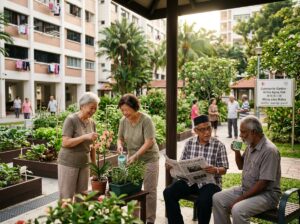
The Rally highlighted how technology can help address manpower shortages, including an ageing workforce. It also highlighted initiatives such as the expansion of Santunan Emas, which aims to help more seniors live their golden years with dignity and purpose.
And that phrase — “dignity and purpose” — is worth thinking about.
Because retirement isn't simply:
“How much money do I have?”
It is also:
“What kind of life can my money support?”
For someone approaching 60, there are several different questions to answer.
How much will CPF LIFE provide?
CPF LIFE can provide a valuable foundation of lifelong monthly income.
But your desired retirement lifestyle may require more than that.
What happens to your other expenses?
Your mortgage may eventually disappear.
But healthcare expenses may increase.
You may want to travel more.
You may want to help your children.
You may want to support your grandchildren.
You may simply want the freedom to enjoy your time without constantly worrying about money.
Do you have enough income-producing assets outside CPF to give you choices?
This is where I believe retirement planning needs to evolve.
The goal isn't necessarily to become “rich”.
The goal is to create enough reliable income and financial flexibility so that you don't have to make every decision based purely on whether you can afford it.
Singapore has built — and continues to build — a strong support system around its citizens.
There is support for children.
Support for parents.
Support for housing.
Support for workers.
Support for seniors.
And support for people adapting to a changing economy.
That's important.
But government support is designed to provide a foundation.
It cannot determine what kind of retirement lifestyle each individual wants.
Are we preparing for the future the way the country is?
Because the future isn't just something the Government needs to plan for. We need to plan for it too.
Retirement planning isn't about predicting exactly what will happen 20 years from now.
It's about building enough financial flexibility that whatever happens, you still have choices.
After all, the goal of retirement planning isn't simply to retire.
It's to be able to live the retirement you want — with confidence, dignity and choices.
